
Judge the signature, not the tool
Using AI to write isn't a loss of professional pride. What counts is who reads, owns and signs the text.
 by Phillip Büchler
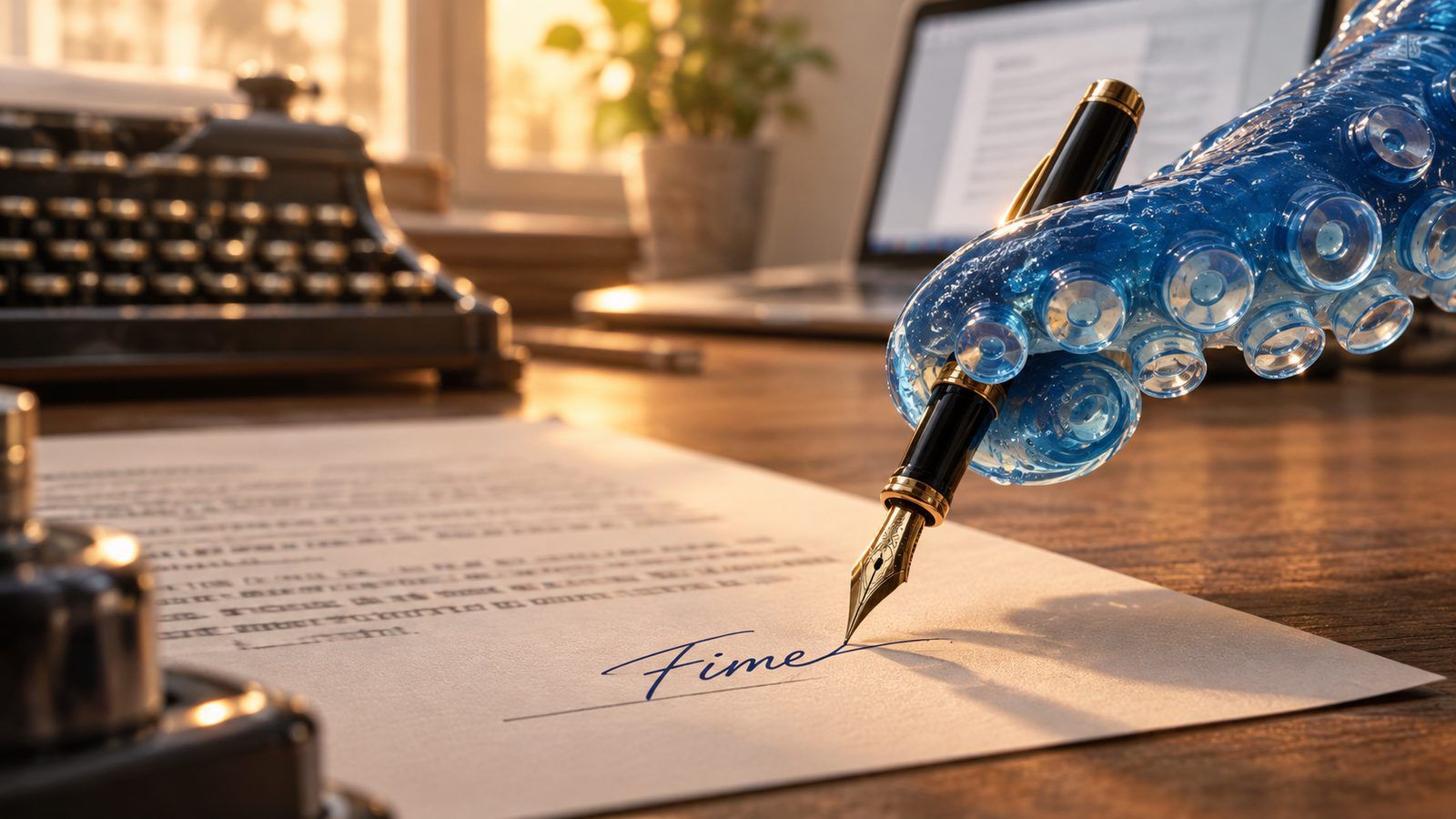
“You can tell that was written with AI.” In some professional circles that sentence ends the discussion, as if the author had handed in their professional pride together with the prompt.
I understand where it comes from. A wall of text that reads slightly off costs the writer ten seconds and the reader ten minutes. After the fifth one, people start judging the tool instead of the text. That’s a shortcut, but an understandable one.
I don’t think the shortcut will last. If the technology keeps going where most people expect it to go1, complaining that something was written with AI will sound like complaining that a letter arrived typed instead of written with a fountain pen.
For decades, managers didn’t write their own letters. They dictated them, and a secretary typed, corrected and sometimes quietly improved them23. Nobody accused the manager of giving up their professional pride. The signature at the bottom meant “I’ve read this and I stand behind it”, and that was the standard that counted.
The real test has always been who answers for the words. If a letter quoted a wrong figure, “my secretary typed it” was never an acceptable excuse. “The AI wrote it” isn’t one either, and it shouldn’t need to be.
So I’d rather we judge the text and the person who signed it, and leave the tool in between out of it.
The typewriter didn’t replace the pen everywhere. Condolence notes stayed handwritten long after offices had switched, because there the effort was part of the message. A typed condolence note said something you didn’t intend to say.
I expect AI to split our writing along a similar line. Nobody needs to know how a status report or meeting notes were produced. A performance review or a message to a colleague after a bad week is different: once the reader suspects you outsourced it, the content hardly matters any more. The line will move, but it’s worth knowing where it runs today.
None of this is an endorsement of AI slop. Using these tools well is a skill, and like most skills it takes practice. My own test is simple: I’ve read every line and I could defend each point with the tool closed.
When smartphones arrived, writing briefly got harder: thumbs on tiny BlackBerry keyboards and later glass instead of ten fingers on a keyboard. Back then my mobile signature read “lovingly handcrafted”. I’m tempted to bring it back for the texts I write without help. This isn’t one of them.
This blog is where I practise. AI gave me back the motivation to write, because design modifications, edits, sourcing and drafting now fit into a full calendar. It’s real practice at low risk, unless you count my reputation, and we’ve covered how that goes.
So raise an eyebrow at the wall of text by all means, but aim it at whoever signed it. And start practising now. Our future overlords will appreciate a well-written prompt.
At least the world economy has placed its bet. ↩︎
When I started my apprenticeship in 1996, I had to type dictated letters. I only knew that from films and was properly shocked. 1996 is starting to sound like the before times. ↩︎
I never quietly improved one. Then again, as a Chief Architect I worked with liked to say: whoever writes down what happened decides what happened. ↩︎